Concrete Driveways
Driveways built from the ground up.
A driveway takes more abuse than anything else on your property — vehicle weight, plows, deicer and freeze-thaw swings all winter long. We build them to take it, starting with what's underneath.
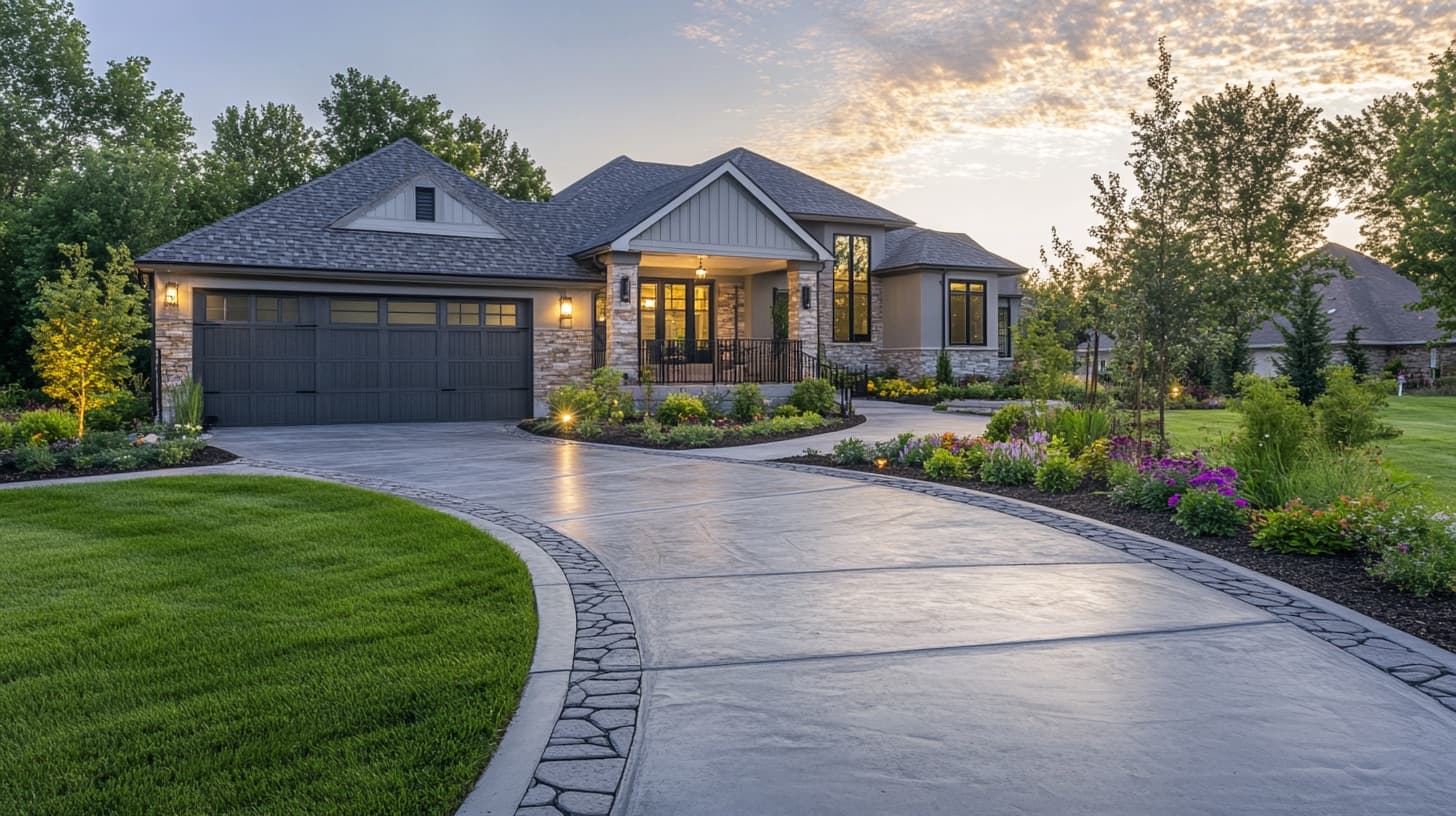
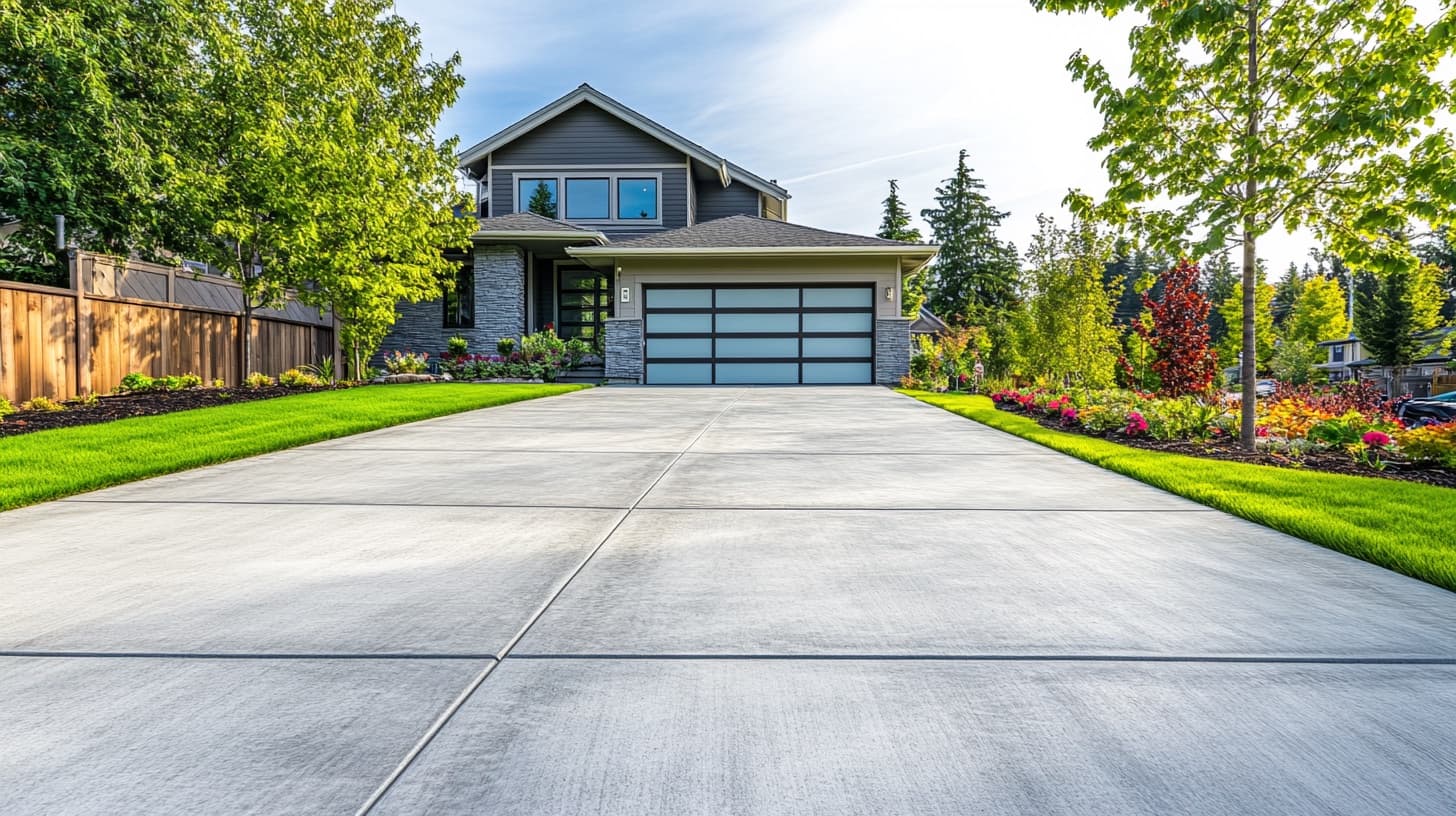
Every spec in writing — before we break ground.
Why it matters
Most driveway failures — the cracks, the sinking slab by the garage, the heaved edge at the street — don't start in the concrete. They start in the ground under it. A soft spot that wasn't compacted, a base that holds water, a slab poured too thin for what drives on it.
We come from excavation and site development, so the ground is where we start. Every driveway we quote spells out the base, the thickness, the reinforcement and the joint layout, so you know exactly what you're paying for before anyone breaks ground.
What we build
Concrete Driveways, start to finish.
New driveways
Full installs for new homes and properties that have never had a proper driveway.
Tear-out & replacement
Demolition and haul-off of failing concrete or asphalt, base correction, and a new slab.
Extensions & widening
Extra parking, a third-car pad or a wider apron, tied into your existing slab.
RV & trailer pads
Thicker, reinforced pads sized for heavy, long-term parking.
Approaches
The section between the street and your property line, coordinated with city requirements.
Built right
The details that decide how long it lasts.
These are the things most homeowners never see — and the first places a cheap job cuts corners. They're all spelled out in your Polaris quote.
Subgrade & compaction
Organic material and soft soil come out. The subgrade is graded and compacted so the slab sits on something that won't move.
Granular base
A compacted gravel base gives the slab uniform support and lets water drain away instead of sitting under it.
Right thickness for the load
Thickness is matched to what's actually parking on it — standard passenger vehicles versus trucks, trailers or an RV.
Reinforcement
Rebar or fiber reinforcement, specified in the quote, to hold the slab together if it ever does crack.
Air-entrained mix
Microscopic air bubbles give freezing water room to expand — the single most important spec for Utah exterior concrete.
Joints & drainage
Control joints are laid out deliberately so cracking happens in straight lines where we want it, and the slab is sloped to shed water away from the house.
Finishes
Choose the look. We'll handle the rest.
Broom finish
The traction-friendly standard for Utah winters. Clean, durable, and the best value.
Exposed aggregate
The top layer is washed back to reveal the stone underneath — textured, grippy and forgiving of wear.
Stamped borders
A decorative band along the edges or apron that lifts the whole driveway without stamping all of it.
Integral color
Color mixed through the concrete, not painted on, so it won't wear off in the tire paths.
Local knowledge
Built for Utah winters
Northern Utah sees freeze-thaw cycles all winter long. Water gets into concrete, freezes, expands and spalls the surface if the mix and the finish aren't right. That's why air entrainment isn't optional on our exterior work.
Deicers are the other enemy. We'll walk you through which products are safe to use and why a new driveway should skip salt entirely for its first winter. A quality penetrating sealer adds another layer of protection — we'll tell you honestly whether yours needs one.
FAQ
Driveways questions, answered.
Serving Orem, Lindon, Provo, Pleasant Grove, American Fork, Lehi and more.
It depends on size, whether there's old concrete or asphalt to tear out, access for the trucks, the thickness needed and the finish. Rather than throw out a per-square-foot number that ignores all of that, we give you a written, itemized quote after we've seen the site — so the price you sign is the price you pay.
Foot traffic is usually fine after a day or so, but vehicles need to wait longer while the concrete gains strength — and heavy vehicles longer still. Curing time depends on temperature and the mix, so we'll give you specific dates for your pour at the walkthrough.
Often, yes. If one section has sunk or broken, we can saw-cut it out and replace it. We'll be upfront if the problem underneath means a partial repair won't hold — patching over a bad base just buys you the same problem again.
Work on your own property often doesn't require one, but anything in the public right-of-way — like the approach or a new curb cut — usually does, and requirements vary by city. We'll confirm what applies at your address before we schedule.
Start here
Let's talk about your driveway.
Tell us about your project in a few minutes with our Quick Quote. We'll follow up to schedule a site visit and get you a written, itemized quote.